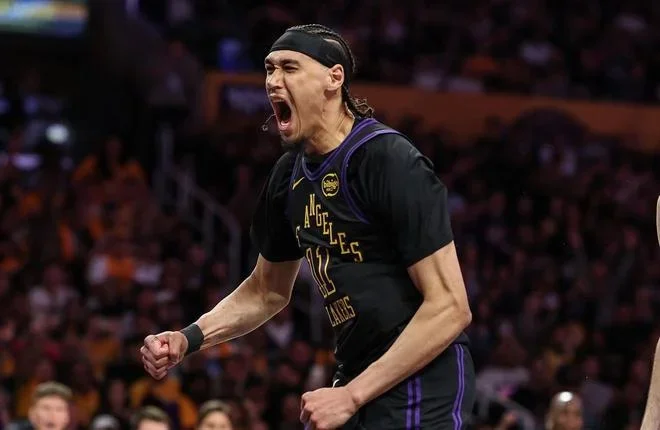

The Los Angeles Lakers gave it their all but were swept 4-0 by the Oklahoma City Thunder in the playoff series. This series has served as a definitive test for the current roster, highlighting who can be relied upon and who needs to be moved on. Lakers general manager Rob Pelinka faces a busy summer in 2026 with a majority of the team’s contracts expiring.
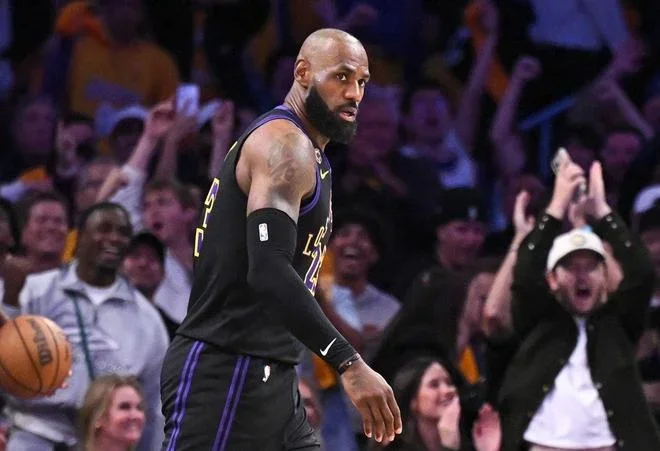
Furthermore, if the Lakers aim to contend for a championship, a roster overhaul is necessary. Rui Hachimura delivered an impressive performance in the final game, scoring 25 points, grabbing 5 rebounds, and dishing out 2 assists while shooting 4-of-8 from beyond the arc. In the closing moments, Hachimura converted a crucial 3-plus-1 play to keep the Lakers alive.
Hachimura was the Lakers’ top three-point shooter this postseason and the team’s third-leading scorer, averaging 17.5 points, 4.0 rebounds, 1.7 assists, 0.9 steals, and 0.6 blocks per game while shooting 54.9% from the field, 56.9% from three, and 72.7% from the free-throw line, with 3.3 three-pointers made per game.
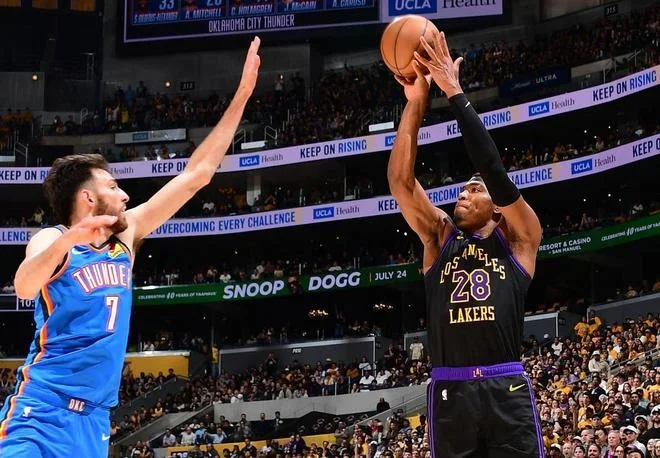
Hachimura’s three-point shooting has improved significantly. He was not a frequent three-point shooter when he entered the NBA, but he began working hard on his long-range game after joining the Lakers, following the advice of former assistant coach Phil Handy. He has now emerged as one of the league’s elite three-point shooters.
Hachimura fits well within the Lakers’ system, and the team is expected to make a strong effort to retain him. He is currently on a $18.26 million salary for this season, and his next contract is projected to be worth over $20 million annually.
Jaxson Hayes, playing on a veteran’s minimum contract worth $3.45 million, showed toughness in the final game. In 27 minutes, he scored 18 points on 8-of-6 shooting, grabbed 5 rebounds, recorded 1 assist, and added 1 block. In key moments, he proved tougher than Deandre Ayton. The Lakers should try to keep him, even if it means offering a contract above the minimum. While Hayes may not be a starting center for a championship contender, he is a solid backup option.
The Lakers also need to retain guards Marcus Smart and Luke Kennard. Smart provides defense, playmaking, and a willingness to take crucial shots. He was instrumental in the Lakers’ first-round victory over the Houston Rockets. Although his offensive efficiency dipped in the second round, he was still effective in guarding Shai Gilgeous-Alexander. Kennard was also a key contributor in the first-round win, providing much-needed shooting off the bench. In the current three-point-heavy era, the Lakers need to stockpile shooters.
However, how much the Lakers can spend on Smart and Kennard depends largely on how much they allocate to re-signing LeBron James and Austin Reaves.
The 41-year-old James is now a free agent and is likely to continue playing. His decision to possibly join the Cleveland Cavaliers depends on the Lakers’ commitment to re-signing him. James earned $52.63 million this season, but his next contract will certainly be for significantly less money. However, offering James only a mid-level exception would be disrespectful. Former Miami Heat president Pat Riley once made a similar mistake in 2016, initially offering Dwyane Wade a contract worth around $10 million annually while giving Hassan Whiteside a four-year, $98 million deal and matching a four-year, $50 million offer for Tyler Johnson. Wade found the offer insulting and chose to join the Chicago Bulls on a two-year, $47.5 million deal.
James will take a pay cut, but given his current abilities, a salary between $20 million and $30 million annually is reasonable. Reaves had 27 points, 7 rebounds, and 6 assists in the final game but committed 8 turnovers. He is not a max-level player, but if the Lakers cannot acquire another All-Star, keeping Reaves is a safe option. The key is deciding what salary to offer. Reaves’ team was reportedly aiming for a five-year, $240 million max contract, but the Lakers may try to negotiate a lower price. Considering Reaves’ abilities and age, a salary between $25 million and $30 million per year seems appropriate.
This summer, the Lakers might also make a run at Giannis Antetokounmpo, but their assets are not as strong as those of other teams. As for players the Lakers should move on from, Maxi Kleber and Jake LaRavia are clear candidates for departure.