

Just one day after China’s men’s and women’s table tennis teams secured the world championship titles, South Korean and Japanese media outlets have published critical analyses, displaying an unexpectedly unified tone.
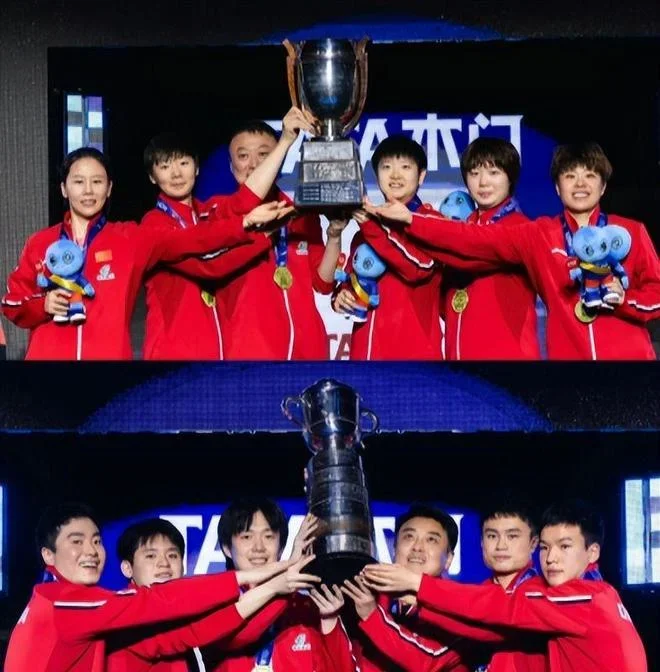
Before the tournament, both the Japanese and South Korean delegations boldly declared their intentions to break China’s long‑standing dominance in the sport and target the team gold medals. Global sports media also widely questioned the Chinese team’s ability to retain their crowns.
However, China’s table tennis squad responded with an undeniable performance. The women’s team staged a remarkable comeback from the brink of defeat, while the men’s team overpowered opponents with sheer dominance, both securing the top honors.

Within 24 hours of the gold medal results, the previously vocal South Korean and Japanese media quickly adjusted their narratives, publishing in‑depth commentaries with near‑identical reasoning—a rapid shift that seemed almost like an on‑the‑spot “apology.”
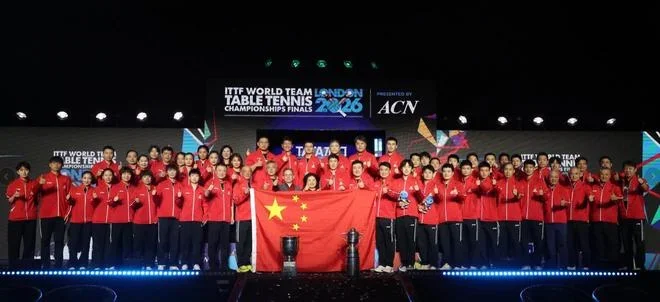
The level of skill and spirit displayed by the Chinese men’s and women’s teams at this World Championships serves as the most vivid and powerful embodiment of the word “champion.”
During the lead‑up to the event, the Japanese and South Korean teams appeared strong: Japan’s top players had repeatedly defeated Chinese national team members in WTT series events, while South Korea achieved impressive results at the Asian Championships and Asian Cup, boosting their confidence. This buildup led media in both countries to confidently predict a “historic breakthrough” and a “new order in table tennis.”
Facing intense pressure and widespread pessimism, the Chinese team remained composed. The men’s team encountered early challenges, with some individual match losses threatening their advancement. Yet through precise tactics, steady rotations, and extraordinary willpower, they fought back point by point to secure a dramatic reversal and defend their title, achieving an unprecedented 12th consecutive men’s team championship.
The women’s team displayed complete dominance: every player was in top form, executing strategies with seamless coordination and efficient transitions. They did not drop a single set from the group stage through the final, winning a seventh consecutive title and reaffirming their unshakable supremacy.
Looking at both finals, Chinese athletes demonstrated systematic and generational advantages in key aspects such as serve and receive quality, rally stability, spin variation, placement precision, and psychological control under pressure. Their Japanese and South Korean rivals could not match these benchmarks.
From near‑defeat to total control, the Chinese team silenced all doubters with textbook‑level performances, forcing the previously boastful Japanese and South Korean teams into silence and delivering a world‑class spectacle of technical and mental mastery.
This overwhelming display prompted South Korean and Japanese media to pivot from confident predictions to far more measured post‑mortems. Their shift in tone has drawn widespread attention both at home and abroad.
South Korean media adopted an unusually candid stance, setting aside excessive praise for their own players to focus on real shortcomings. They pointed out clear gaps in fundamentals, emotional regulation under high pressure, and tactical decision‑making in critical moments—deficiencies that made defeat inevitable.
Yonhap News Agency stated in a special report that the development paths of Chinese and Korean table tennis have diverged for over two decades, citing structural differences in youth training systems, coaching pipelines, scientific support, and competition density. They acknowledged that occasional victories cannot bridge these gaps, and that China’s deep talent pool and real‑time correction mechanisms are a moat Korea cannot quickly replicate.
Japanese media also shed emotional language and returned to professional analysis. Leading table tennis magazine *Takkyu World* noted in a post‑tournament analysis that Japan’s main weakness was not technical or tactical, but a noticeable mental fluctuation when scores were tight and pressure mounted—far inferior to the composure of Chinese players.
*Tokyo Sports* singled out Sun Yingsha, praising her “increasingly clear thinking at critical moments” and her ability to maintain high‑quality shots and rhythm control even in decisive games. They emphasized that this “rock‑solid calm under adversity” is exactly the quality Japanese rising stars need to develop.
From pre‑match calls to “overthrow tradition” to post‑match admissions of inadequacy, the shift in Korean and Japanese media was total and unabashed. Many fans, after reading these commentaries, remarked that true strength needs no words—only on‑court performance commands respect and awe.
The Chinese table tennis team has long stood at the center of the world’s storm, regarded as the ultimate rival. Every major international tournament brings predictions of a “fall of the dynasty,” but the results never deviate from the same path—the five‑star red flag rises atop the podium.
This collective acknowledgment from Korean and Japanese media is not merely post‑event analysis but a consensus confirmation of China’s absolute dominance in table tennis.
The respect earned by the Chinese team is rooted in their extreme on‑court execution: the women’s team remained calm and clear‑headed even in desperate situations, showcasing masterful psychological regulation; the men’s team controlled the rhythm from start to finish, demonstrating technical dominance.
This combination of top‑tier technique, mental resilience, scientific teamwork, and deep talent reserves forms an insurmountable peak. No matter how opponents refine their preparations or amplify their rhetoric, the Chinese team always defends its honor with unshakeable fundamentals and unwavering composure. That is the most solid source of China’s table tennis strength.
**Conclusion**
From aggressive declarations to calm gap analysis, the dramatic reversal in Korean and Japanese media attitudes is the most convincing testament to China’s power.
Over decades, generations of Chinese table tennis players have passed the torch, embedding the belief of “loving the country, training hard, fighting tenaciously, and winning glory for the nation” into their blood. Through countless days and nights of practice and sweat, they have forged victory after victory into eternal classics of world table tennis, securing the sport’s highest ground.
Looking ahead, we believe the Chinese team will maintain its competitive drive, continue to refine its skills, and shoulder its responsibilities. They will keep shining on the world stage, winning more honors for the nation, and writing new chapters in the glorious epic of Chinese table tennis.
**Sources:**
– Kyodo News: “Japan wins silver in men’s and women’s team events at World Championships; defeated by China,” May 11, 2026.
– *Takkyu World*: “Table tennis: Tomokazu Harimoto says ‘emotions easily show’; Chinese media analyzes reasons for failure… ‘Championship declarations become burden under pressure’,” May 11, 2026.
