

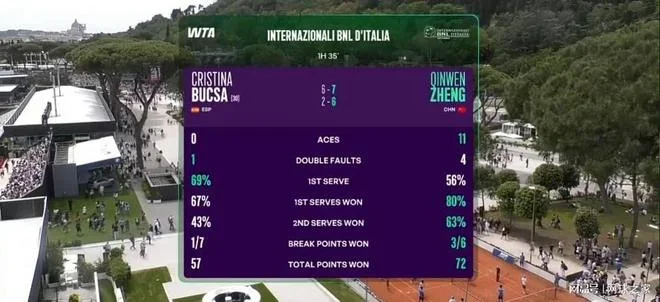
Zheng Qinwen advanced to the third round of the Italian Open in Rome with a hard-fought 7-6(6), 6-2 victory over qualifier Bouchard. The match, lasting just 95 minutes, saw Zheng fire 11 aces and win 80% of her first-serve points, but the statistics tell only part of the story.
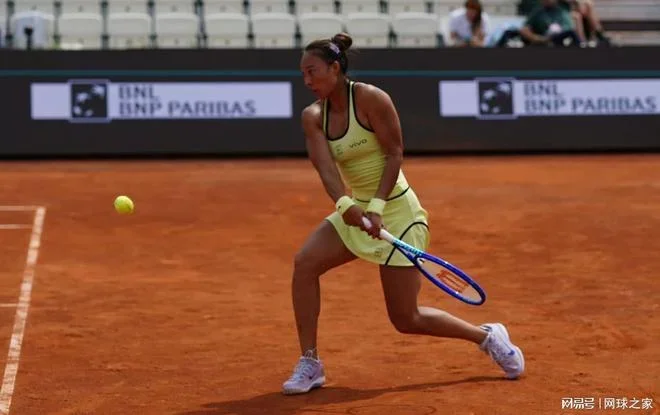
The world No. 37 started strongly, breaking Bouchard early and racing to a 5-1 lead. However, her concentration wavered as the set progressed, with a flurry of unforced errors and double faults allowing Bouchard to level and even hold set points. Zheng saved two set points before forcing a tiebreak, where she trailed 1-3 but rallied to win 8-6.
**Set One: A Tale of Two Halves**
Bouchard, who has improved significantly over the past year and won a title earlier this season, plays a fast, flat-hitting style suited to hard courts. On Rome’s red clay, her game is less effective when opponents slow the pace and use heavy topspin. Zheng’s early dominance was undone by a mid-set lull, a recurring issue that raises questions about her ability to maintain focus against tougher opponents.
**Emotional Outburst and Tears**
A key moment came when Zheng received a time violation warning on set point. She argued that a spectator walking behind the baseline had disrupted her rhythm, but the umpire stood firm. During the changeover, Zheng was seen crying in her chair, and the emotion carried into the second set, where she faced an early break point.
Zheng’s tears are not unusual; they reflect the immense pressure she is under during a period of physical and mental vulnerability. Since undergoing arthroscopic elbow surgery in mid-2025 to remove bone fragments, her recovery has been slow and turbulent. She missed the Australian Open, withdrew from Stuttgart, and saw her ranking slide from the top 10 to around No. 37. Every win now carries extra weight.
**Anisimova Withdrawal – A Blessing?**
Shortly after Zheng’s win, word came that No. 16 seed Sofia Anisimova had withdrawn from Rome due to a wrist injury. Her replacement, Ruse, will face Ostapenko, with the winner to meet Zheng in the third round. While many fans breathed a sigh of relief, the real challenge remains Zheng’s own body and mindset.
“She hasn’t been able to train at full intensity, her movement is limited, and she can’t go all out on her serve,” observers note. “The biggest opponent is herself and her injury.” Zheng acknowledges this, saying she must take things step by step.
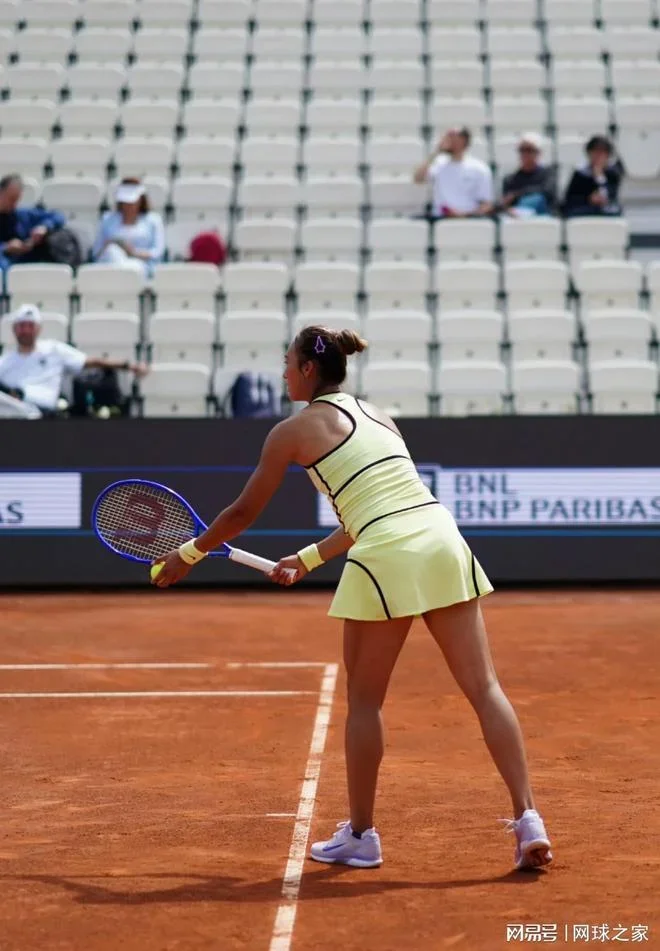
**What This Win Means**
The victory may not have been pretty – some critics might call it “ugly” – but for a player fighting back from injury, a win is a win. “At this stage, being on the court, competing, and grinding out results is the best news of all,” one analyst commented. Zheng’s path back to the sport’s elite will be long and arduous, requiring patience and resilience from both her and her fans.
This is perhaps the most difficult phase of Zheng Qinwen’s career. Every round from now on is a major test of her physical and mental fortitude.
